When monitoring detects a problem — who confirms it?
ALIDA brings physical validation into wind turbine operations,
closing the gap between anomaly detection and decision certainty.
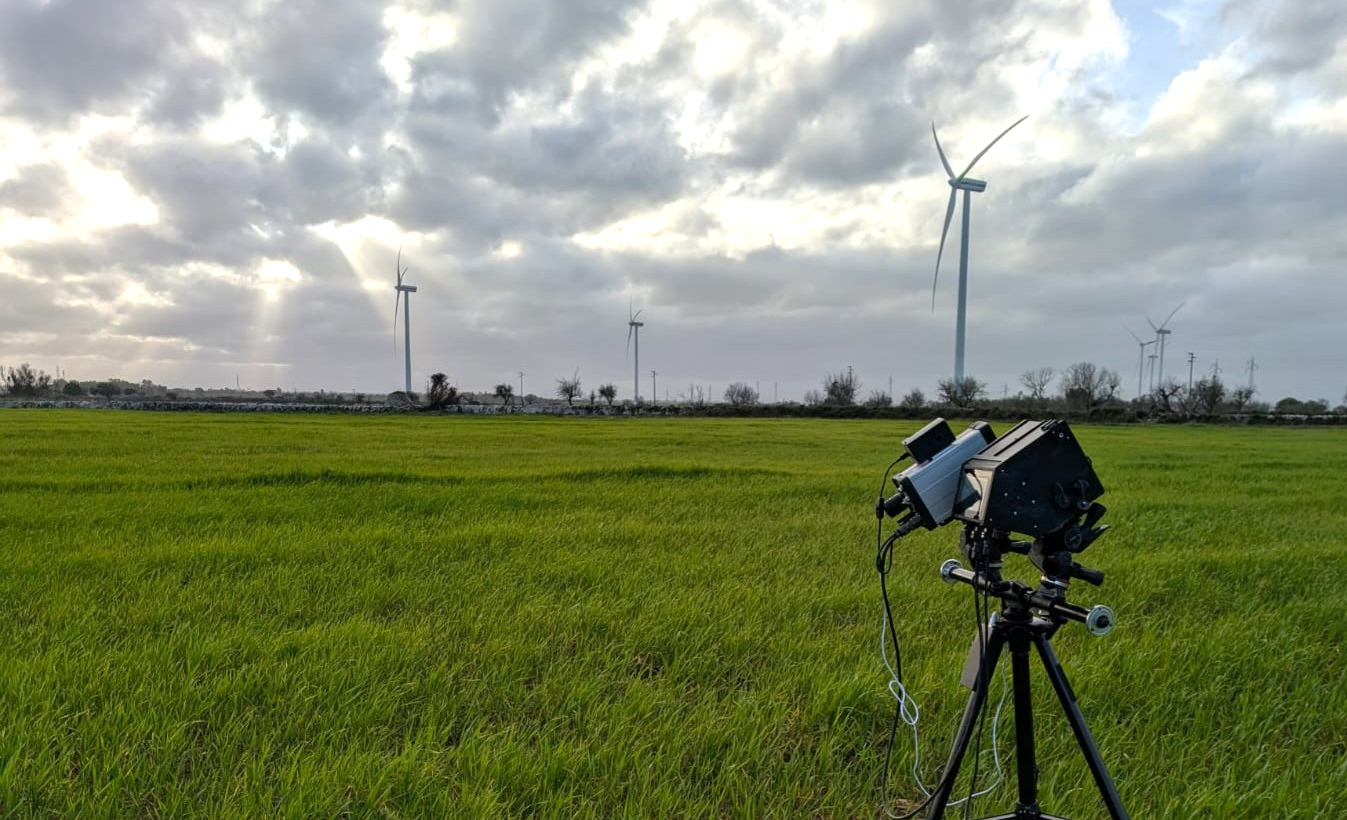
Works on operating turbines — no shutdown required
Detection is not validation
Monitoring platforms detect anomalies. Geometric inspection captures shape.
Neither answers the operational question:
Is this real — and what should we do about it?
Decisions are taken with incomplete structural information.
Static geometric measurement
Conventional inspection captures shape at a moment in time. The rotor operates dynamically; a static snapshot leaves part of the picture out.
Shape ≠ behavior
Geometric profiles describe what a blade looks like. They do not describe how it actually behaves under real operating loads.
Controlled conditions required
Most existing systems need ideal measurement environments. Real-world operational variability often falls outside their working range.
Multi-sensor complexity
Invasive multi-sensor arrays add cost, install time, and points of failure in the field.
Limited decision support
Available evidence often describes the past without giving operators a clear basis to act. Decisions remain reactive.
How ALIDA differs
Existing tools focus on geometry. ALIDA focuses on structural behavior under operation. The two approaches are complementary — but only one closes the validation gap.
- Static measurement of shapes and profiles
- Limited insight into dynamic behavior
- Multi-sensor setups and access constraints
- Best results require controlled conditions
- Answers "what does it look like"
- Behavior of the rotor during normal operation
- Blade-level structural evidence
- Single ground-based system, no turbine access
- Works in standard field conditions
- Answers "what is actually happening"
Phase-Resolved Differential Inference
A physics-based approach to validating rotor and blade behavior on operating turbines.
A validation layer for when monitoring is not enough
ALIDA provides a physical validation endpoint for rotor dynamics — integrated into existing workflows, without turbine shutdown.
Capture
- Laser + video sensing
- No turbine shutdown
- No downtime
Measure turbines during normal operation. Deploy in minutes. No permits. No intervention.
Analyze
- Rotor dynamics
- Imbalance detection
- Measured pitch offset
Identify which turbine, and which blades, are off. Quantify imbalance. Prioritize action.
Validate
- Structural confirmation
- Physics-based evidence
Move beyond SCADA assumptions. Confirm whether intervention is justified.
Correct
- Targeted pitch correction
- OEM-ready adjustments
Fix only what needs fixing. Blade-level actions. No blanket interventions.
Verify
- Post-fix measurement
- Residual imbalance quantified
Measure again. Compare before vs after. Prove the intervention worked.
What makes it different
A short summary of where ALIDA shifts the focus.
Outcome: clearer evidence · simpler deployment · operation in field conditions · decision-ready output.
A validation layer designed for industrial wind operations.
From detection to diagnosis
Detection is not diagnosis.
From SCADA alone, the cause is ambiguous. ALIDA provides the structural evidence to resolve it.
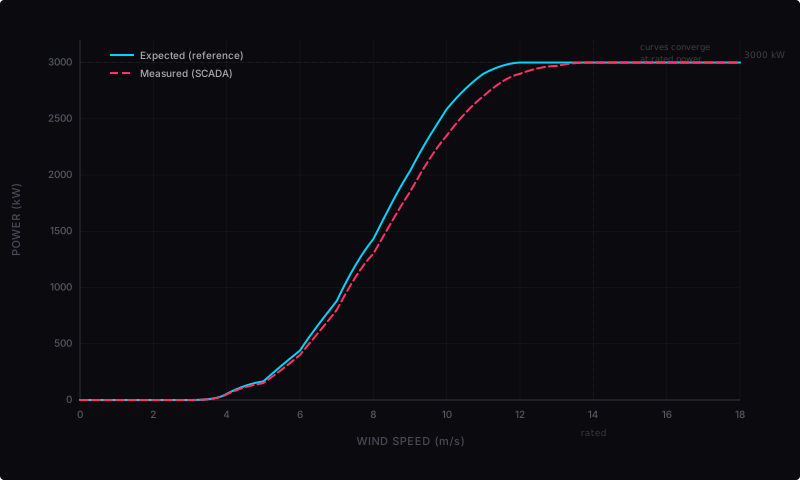
SCADA flags underperformance
The monitoring system detects a deviation from the expected power curve. Energy output is consistently below reference in the sub-rated wind speed region.
The signal is clear. The cause is not.
Root cause is unknown
The loss pattern is visible, but its origin is indeterminate. From SCADA data alone, the underperformance could be caused by:
- Pitch misalignment on one or more blades
- Yaw misalignment of the nacelle
- Aerodynamic degradation or blade damage
These failure modes produce overlapping signatures in the power curve. They are indistinguishable from SCADA.
Power curve evidence
Field deployment — ALIDA measurement
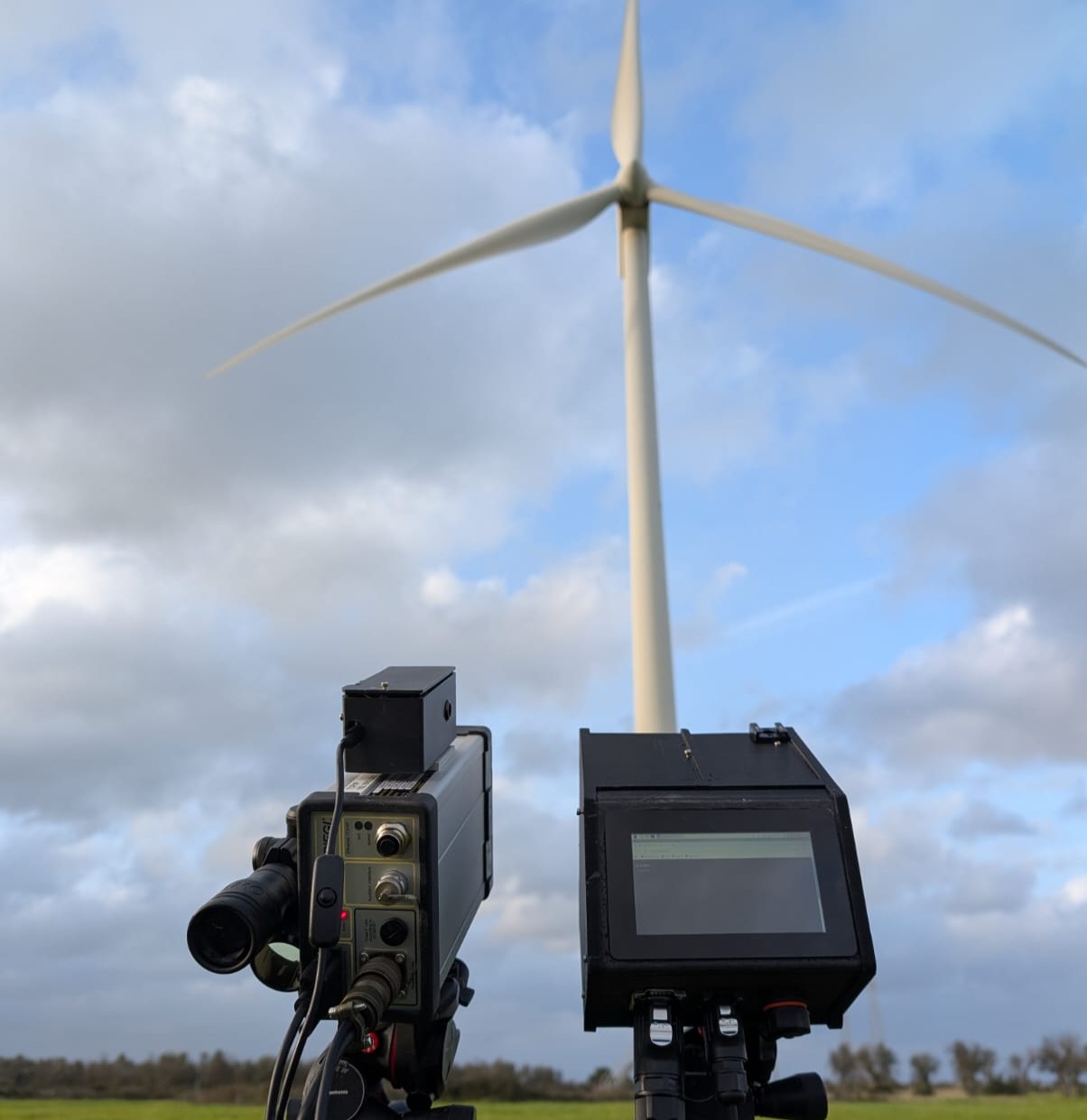
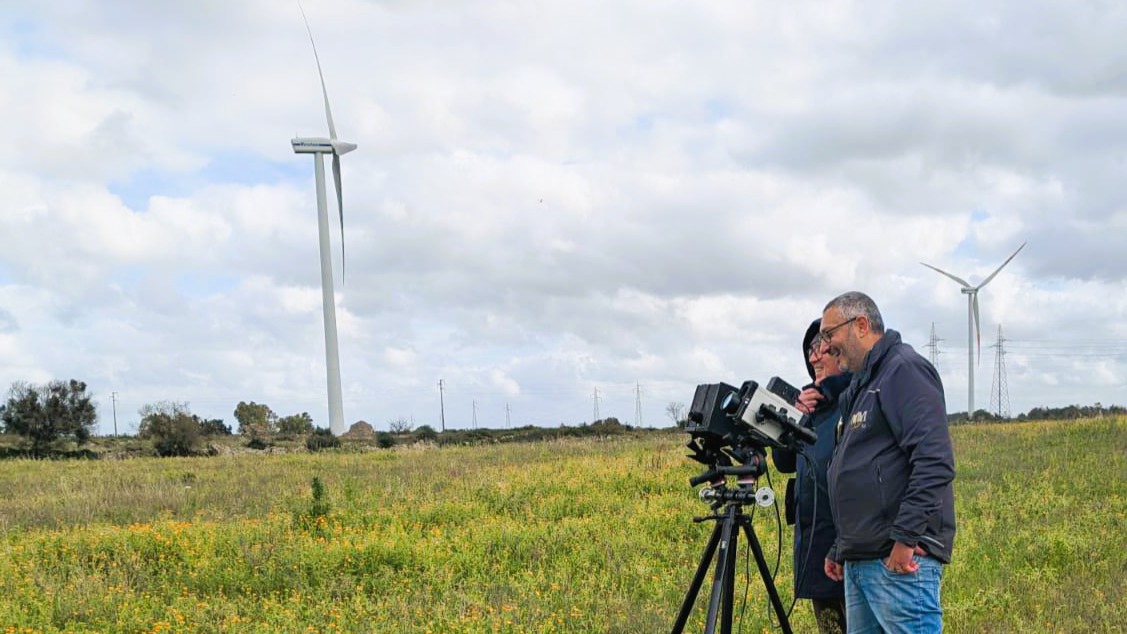
ALIDA is deployed on-site. The laser system measures the operating turbine from ground level. Minutes of recording. Direct physical observation. No shutdown. No physical access to the turbine required. No drone.
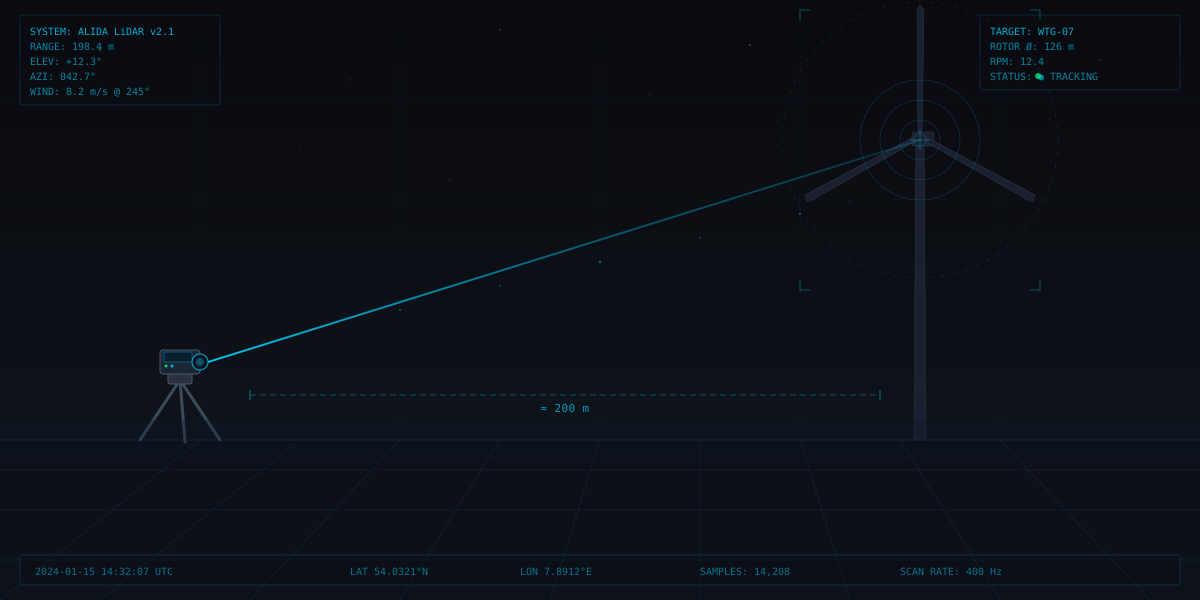
Geometry reconstruction & blade-level analysis
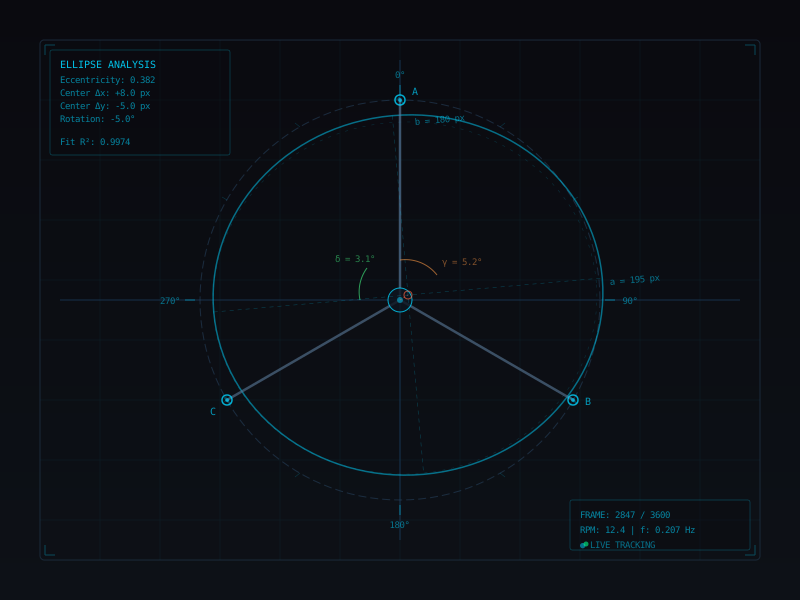
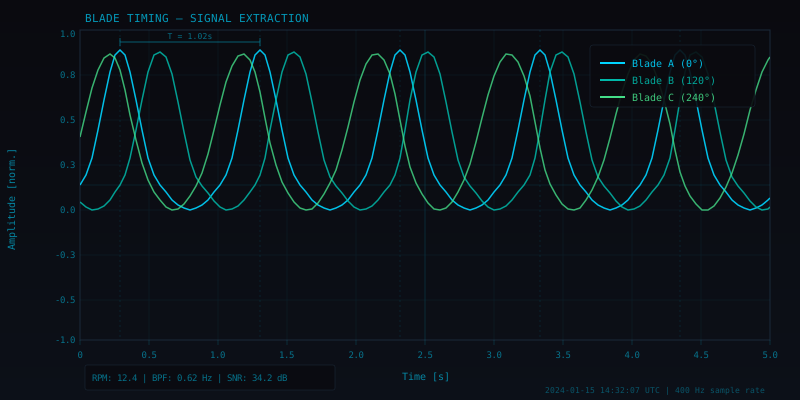
From raw signal to rotor physics. ALIDA reconstructs the rotor geometry and extracts blade-level timing. Each blade is individually identified and measured.
Clear diagnosis
The ambiguity is resolved. ALIDA identifies:
- Which blade is misaligned
- Whether it is a pitch or yaw issue
- The exact angle deviation (e.g. +1.8° on Blade 2)
From uncertain signal to structural certainty.
Actionable correction
The operator acts on precise, validated information. Correct the specific blade. Adjust the exact angle. No guesswork. No broad inspection campaign. Reduced energy losses and targeted maintenance.
The right intervention. The first time.
Where the field is heading
Three phases of turbine inspection — and where ALIDA fits.
Manual inspections
- Visual inspections and mechanical tools
- Limited precision, long timelines
- Reactive, post-failure approach
Geometric analysis
- Optical and laser geometric measurement
- Static profile and shape analysis
- Preventive, but limited to geometry
Physical validation of behavior
- Behavior of the rotor under real operation
- Blade-level structural evidence
- Decision-ready output for operators
Why it matters
Without validation
- Reactive maintenance
- Higher costs
- Slow decisions
With ALIDA
- Faster decisions
- Targeted inspections
- Reduced uncertainty
Designed for real-world integration
Deployable on operating turbines, without shutdown, modification, or disruption.
- No turbine downtime
- No physical access to the turbine
- No access constraints
- No drones
Works as a layer on top of SCADA and analytics platforms.
When ALIDA is used
Unclear SCADA anomaly
When monitoring flags something but the root cause is uncertain.
Repeated alerts without root cause
Persistent alerts that don't resolve and lack structural explanation.
Before OEM escalation
Get physical evidence before escalating to manufacturers.
Before costly inspection campaigns
Validate before committing to expensive, broad inspection programs.
System pipeline
Not another monitoring system
Monitoring detects anomalies. Geometric inspection captures shape.
ALIDA confirms what is actually happening on the rotor — and adds a sober, complementary layer to existing tooling.
A decision validation layer.
Built in industrial context
Developed around real rotor analytics problems.
Explored in OEM-relevant environments (including Vestas-related contexts)
Team
AI + Sensing + Engineering
From measurement to decision-ready output.
Francesco Paraggio
AI Architect - Industrial Systems
AI Architect working at the intersection of data, physics, and decision-making.
Experience across regulated and industrial environments (EUIPO, Siemens Energy, Sandoz, BNP Paribas).
- Wind analytics, SCADA, predictive maintenance
- System design → from signal to decision
Nico Macrionitis
Embedded Systems - Sensing & Infrastructure
Engineer specialized in embedded systems, Linux, and hardware/software integration.
Focus on reliable data acquisition and edge computing.
- Embedded architectures & real-time systems
- Sensor integration & pipelines
- Open-source and low-level engineering
Fabrizio Sardella
Wind Turbine Engineer - Industrial Validation
30+ years in wind energy, including Technical Director at Vestas Italia.
Expert in turbine mechanics, OEM standards, and field validation.
- Rotor dynamics & structural behavior
- Industrial validation & quality
- OEM interface
Ready to validate?
We are currently exploring pilot opportunities with utilities and partners.